Jack Butcher × Starbucks
COLLECT THE DOTS
A cryptic coaster is a reason to talk to a stranger.
Six of them are scattered across Art Basel Hong Kong by Starbucks.
Starbucks
No logos, no banners, no branding. People dressed in Starbucks colors are stationed across the fair. Each one carries coasters showing a single die face. The brand isn't announced — it's recognized. Find them, start a conversation, collect a coaster.
(Placeholder Design)
Die face in Starbucks green. The dot count matches a real die — the coaster is the game piece. "Collect the Dots" around the rim tells you exactly what to do.
Jack Butcher, Art Basel 2026, Booth Z01. Everything you need to find the installation. The green is the only brand signal — no logo required.
Find someone in Starbucks colors at the fair. Get a dot coaster. Yours to keep, trade, or show off.
To complete the set you need all six dots. The coaster gives you a reason to look at the person next to you. Five conversations, five strangers, five dots you didn't start with.
Bring six coasters. Starbucks covers your roll. Walk away with a custom set in a Starbucks case.
People in Starbucks colors stationed across the fair, each carrying dot coasters. No logos, no branding — just the colors. They are the distribution network. The fair floor becomes the game board.
A single dot on a coaster. It looks different. People photograph it, share it, ask about it. Every dot is branded content moving through the fair.
You notice the person next to you has a different number. You say something. Starbucks just created a social moment at an art fair.
You're walking around the fair, talking to strangers, collecting dots. The story of assembling the set is more shareable than the set itself.
Anyone can pay $88 to roll. But a complete set of six gets you in free. Starbucks picks up the tab. Every roll produces a unique set. No winning number, no losing number. Just yours.
Starbucks-redeemed rolls come in a custom Starbucks-branded case. The brand isn't on a banner behind the booth. It's on the object people take home, display, and photograph. Permanent, physical, collectible.
Starbucks buys 750 rolls for fair guests. 4,500 coasters turned in and claimed — many more produced, six designs, one per coaster. We provide the artwork and make the dice. We will provide the people on the ground, dressed in the colors — no logos, no uniforms. Representatives give out duplicates to encourage new conversations and trading for a full set. Collect all six dots, earn a roll, take home a custom set in a Starbucks green case. Every participant walks away with either a conversation or a sculpture. Usually both.
Order a specific drink at participating Hong Kong Starbucks locations during Art Basel week to unlock free fair tickets. Secret menu item tied to the installation. Drives foot traffic to stores. Creates scarcity and exclusivity. Social proof as people discover and share the unlock mechanism.
Pay or play. The conversation is the same.
2026
Dice with chance removed
Work vs. Luck, Presented at Art Basel Hong Kong
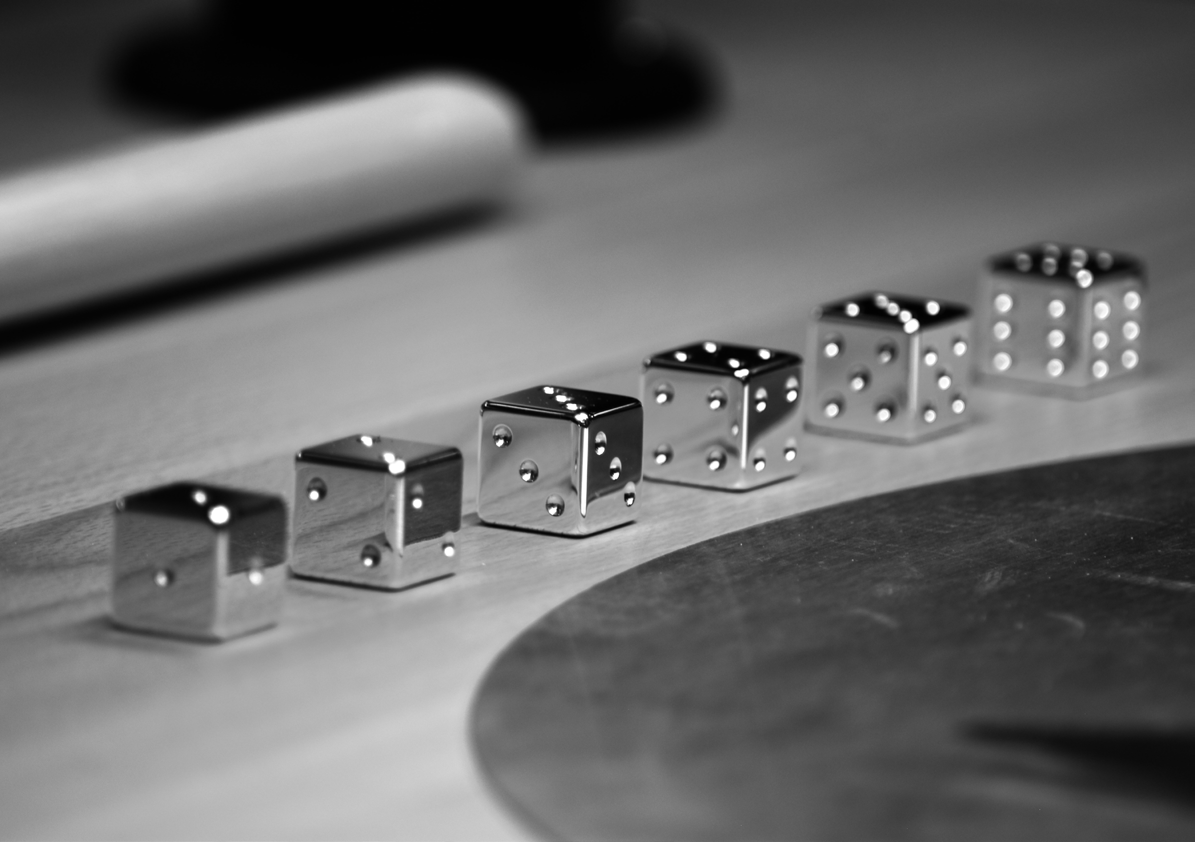
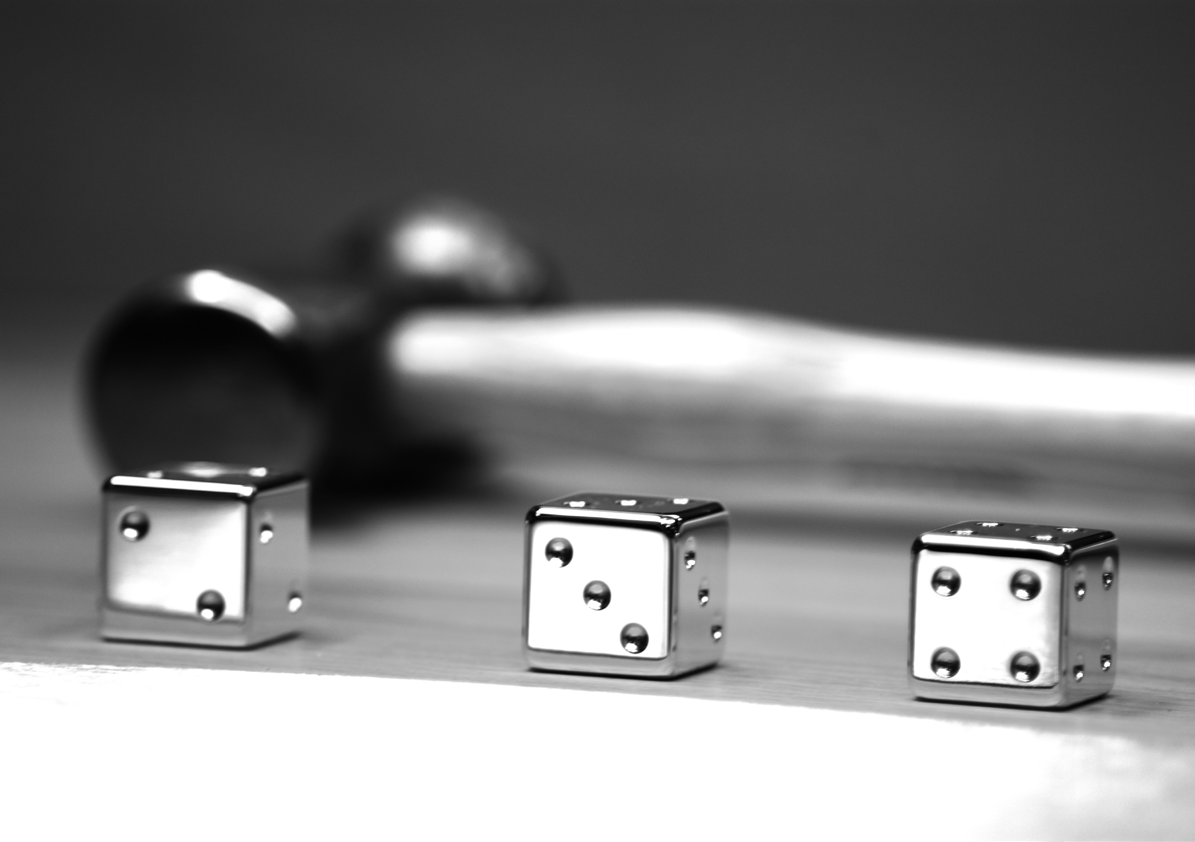
Six dice. Each one shows a single number on every face. The one shows only ones. The two shows only twos. And so on. Tools shaped like uncertainty, rebuilt as certainty.
At the booth, you roll six regular dice. Your result determines which set you take home — six custom dice pulled to match your exact roll. Assembled and boxed on the spot. Every set is unique, but no set is better or worse than another. There is no winning number. Black and white resin. $88. Above that, 80 editions in pure silver through Asprey Studio. $8,888.
This is not gambling. Every outcome has equal value. Every participant takes home the same product. The roll determines which set is yours, not whether you get one. The mechanic is social — collecting six dots means meeting five strangers. Structurally closer to a scavenger hunt than a wager.
The real piece isn't the dice. It's the five conversations it took to collect the dots.
2024
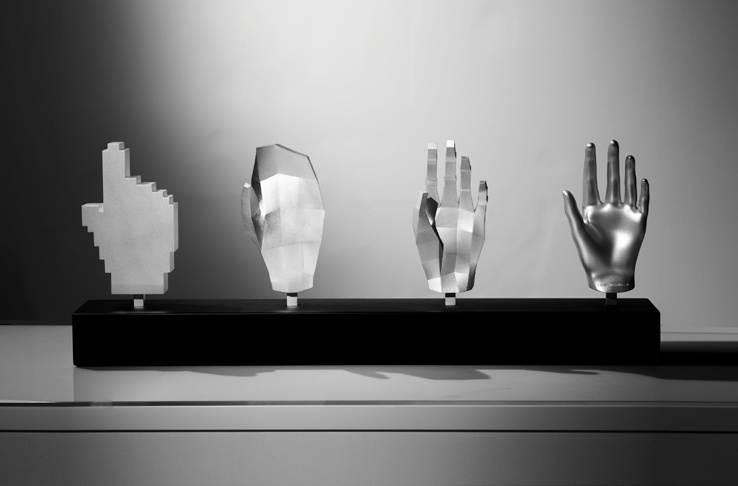
Four hands in solid silver. From anatomical detail to pixelated cursor. A progression tracing the migration of labour from physical effort to interface-driven action.
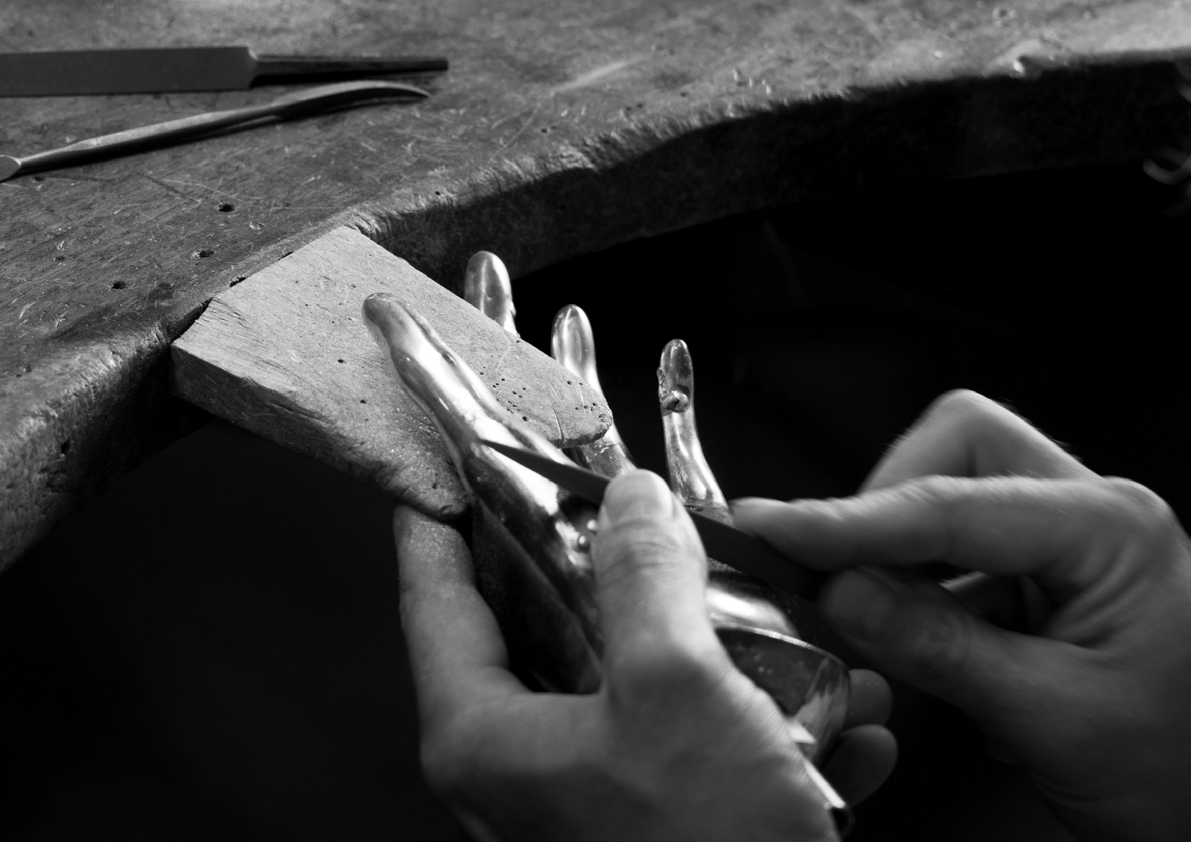
Cast in pure silver and hallmarked by the UK Assay Office through Asprey Studio. The first hand bears newly registered marks connected to the artist — a centuries-old tradition of trust embedded directly into the object.
Work asks what happens when labour becomes invisible. Luck asks what happens when you remove chance from the outcome. Together they frame the question: is the value in the object, or in how you got there?
Activation touchpoints
Artist cocktail party
Art Basel opening night. Collectors, press, industry insiders. All six dot coasters scattered across every table. By the end of the night, people are comparing dots, trading across tables, and trying to complete a set before the fair even opens.
Nobody completes a set at the party — not enough of each number to go around. But the game starts here. These are the VIPs, the collectors, the people who need to finish what they started. They arrive at the fair the next morning already looking for the people in green, heading straight to the booth.
The brand doesn't need a banner behind a DJ. It needs to be the reason two collectors introduce themselves.
UX of claim
You arrive with six dot coasters. What happens next is a moment, not a transaction. You've already had five conversations with strangers to get here. The roll is a ceremony. Every outcome is equal. SILK team staffs the booth. Green dots are painted on the floor — marking where to stand, where to roll, where to watch. They guide the flow without a single sign. The only brand presence in the booth is underfoot: subtle, unmissable, and in every photo. The brand lives on the journey that got you there, the dots under your feet, and the case you take home.
Present six dot coasters. Staff verify all dots and log your roll number. The coasters are yours to keep. Marked proof you were there.
Six dice on custom felt. Everyone nearby watches.
Your roll determines your set. Each die shows only the number you rolled, on every face. Starbucks-redeemed sets go in a Starbucks case.
Every roll is photographed, logged, and posted to the live feed. Shareable, timestamped, permanent.
The booth isn't a checkout counter. It's a stage. Every roll is a performance with an audience. And every outcome is a one-of-a-kind set. There's nothing to win or lose. Just something to take home and a story about how you got there.
Teaser & recap
30–60 seconds. Text-driven, high-paced. Quick cuts between dice, dots, coasters, green, hands, strangers. No voiceover — just type on screen. Art x Starbucks. Collect the Dots. Art Basel Hong Kong. Drops before the fair to build anticipation and seed the mechanic.
60 seconds. Same energy, same pace. Real footage from the fair floor — people spotting the green, trading coasters, rolling at the booth, reacting to their set. Text-driven stats woven in: dots collected, sets completed, conversations started. Starbucks is in every frame but never the subject. The content writes itself.
Starbucks people across the fair
People dressed in Starbucks green and white are stationed throughout Art Basel. No logos, no uniforms — just the colors. Each one carries coasters for a single die face. One mechanic, fair-wide.
No signage, no instructions. The coaster is a die face. It says "Collect the Dots." The mechanic is implied. People figure it out, and figuring it out is part of the fun.
The fair floor is the game board. The people in green are the starting points. The coaster is a reason to talk.
Digital Artist & Founder
Jack Butcher is the founder of Visualize Value. His digital art projects have generated over $1 billion in secondary sales. He has exhibited at Art Basel Miami Beach and Paris Photo, and collaborated with Oracle Red Bull Racing and Art Blocks. Prior to founding VV, he spent a decade in advertising working for Ferrari, American Express, Oracle, and other major brands.
Art Basel Miami Beach 2025
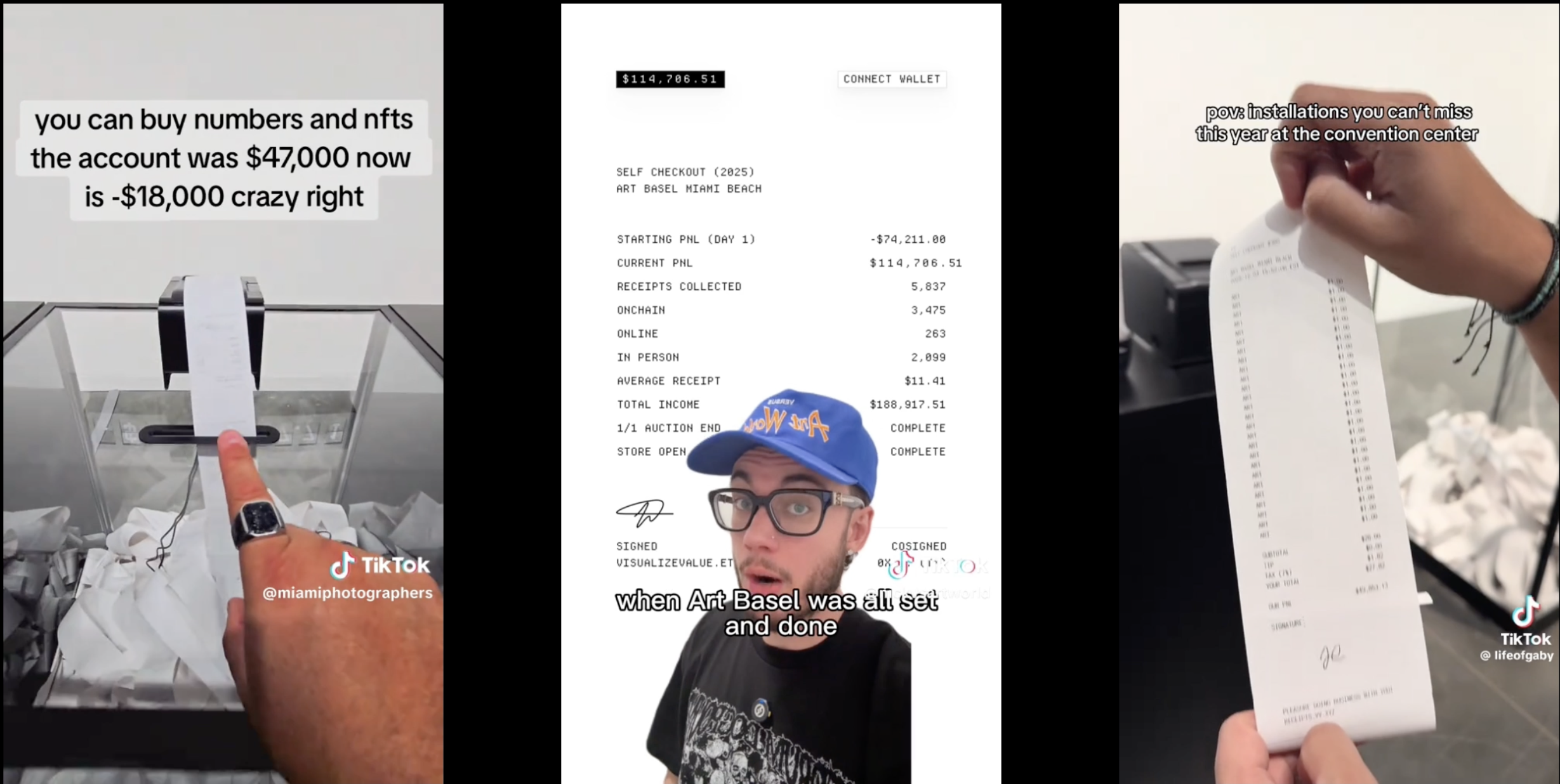
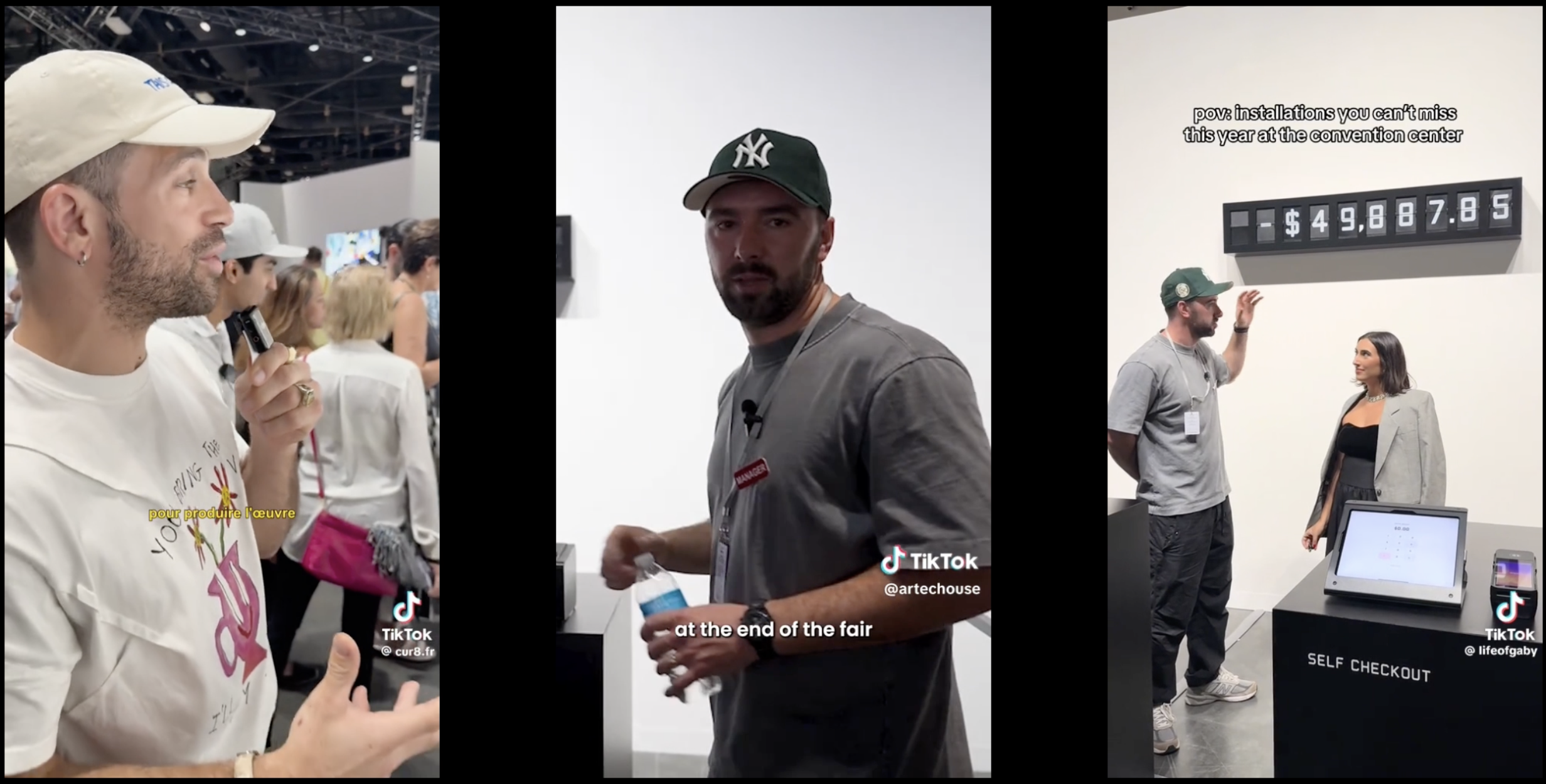
Self Checkout, Jack's most recent Art Basel booth, generated immediate and wide coverage. A pay-what-you-wish installation that made the $74,211 cost of exhibiting completely transparent. 5,837 receipts sold across five days.
Beyond press, the project drove wide user-generated content across TikTok and Instagram, with multiple millions of views on visitor-shot videos. The booth became a content engine: every receipt, every price reveal, every reaction filmed and shared organically.
"A fascinating project that makes very visible the substantial cost involved in bringing work to a fair."
Artnet News"New tech and old names drive sales at Art Basel Miami Beach."
The Art Newspaper"Every dealer at a Miami fair has been doing this exact calculus in their head all week. Butcher is just making it visible."
The Gray MarketThe contemporary design arm of Asprey London, est. 1781. Over two centuries of heritage in silversmithing and fine craftsmanship. Bespoke objects using traditional techniques and contemporary design.
An art house uniting gallery representation with a creative and tech studio, built to expand artists' potential rather than limit it.
Experiential marketing studio specializing in culturally embedded brand activations, turning concepts into physical moments that move through audiences, not past them.