Jack Butcher × Starbucks

The Art of Conversation

An Art Basel Hong Kong activation that turns every Starbucks coffee into a reason to talk to a stranger. Six die faces distributed across the city. Collect all six and roll for your set. The art isn't the object. It's the five conversations it took to get there.

Jack Butcher

Digital Artist & Founder

Jack Butcher is the founder of Visualize Value. His digital art projects have generated over $1 billion in secondary sales. He has exhibited at Art Basel Miami Beach and Paris Photo, collaborated with Oracle Red Bull Racing and Art Blocks, and spent a decade in advertising before founding VV.

Self Checkout, Jack's most recent Art Basel booth, generated immediate and wide coverage. A pay-what-you-wish installation that made the $74,211 cost of exhibiting completely transparent. 5,837 receipts sold across five days.

Beyond press, the project drove wide user-generated content across TikTok and Instagram, with multiple millions of views on visitor-shot videos. The booth became a content engine: every receipt, every price reveal, every reaction filmed and shared organically.
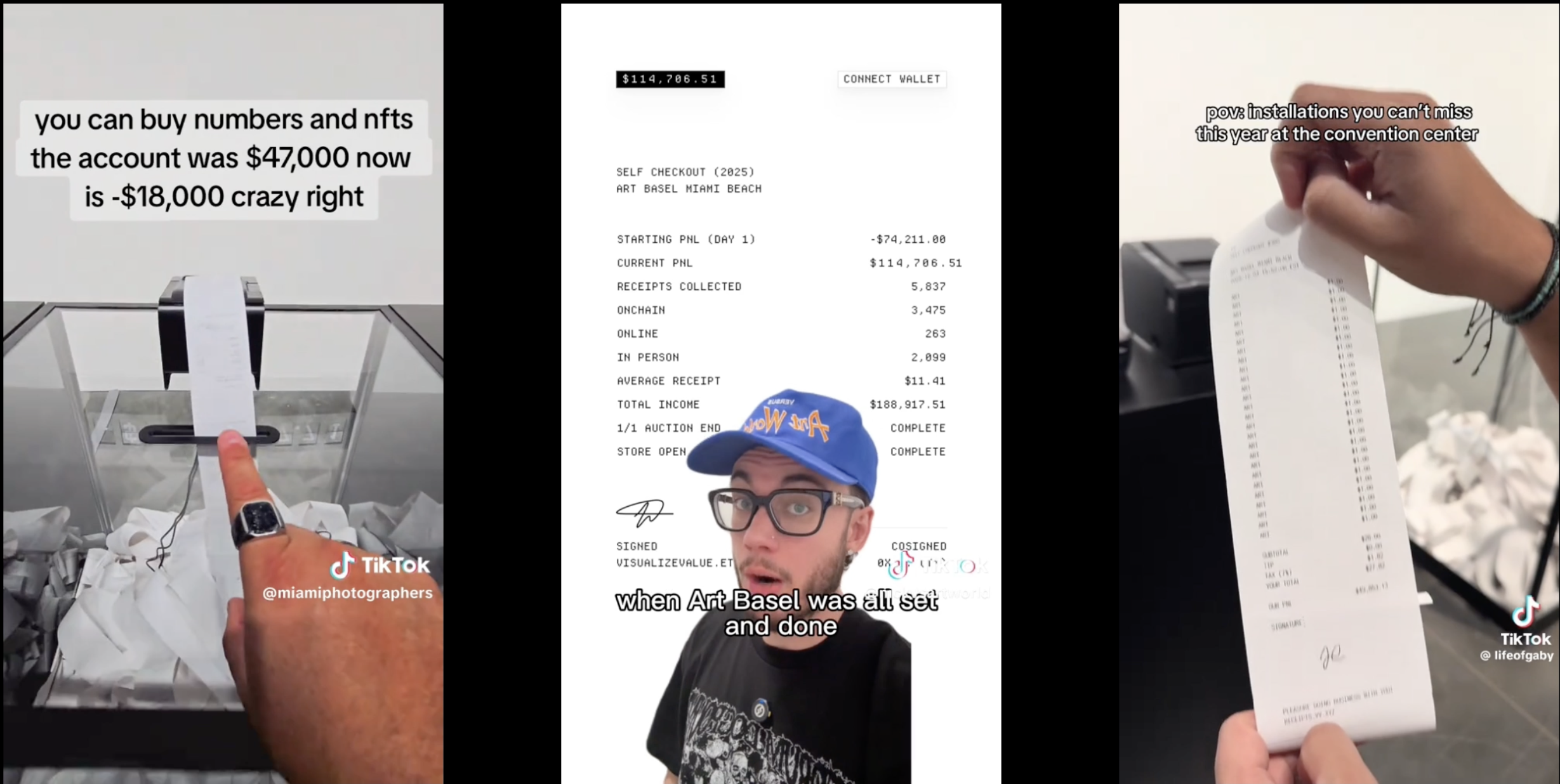
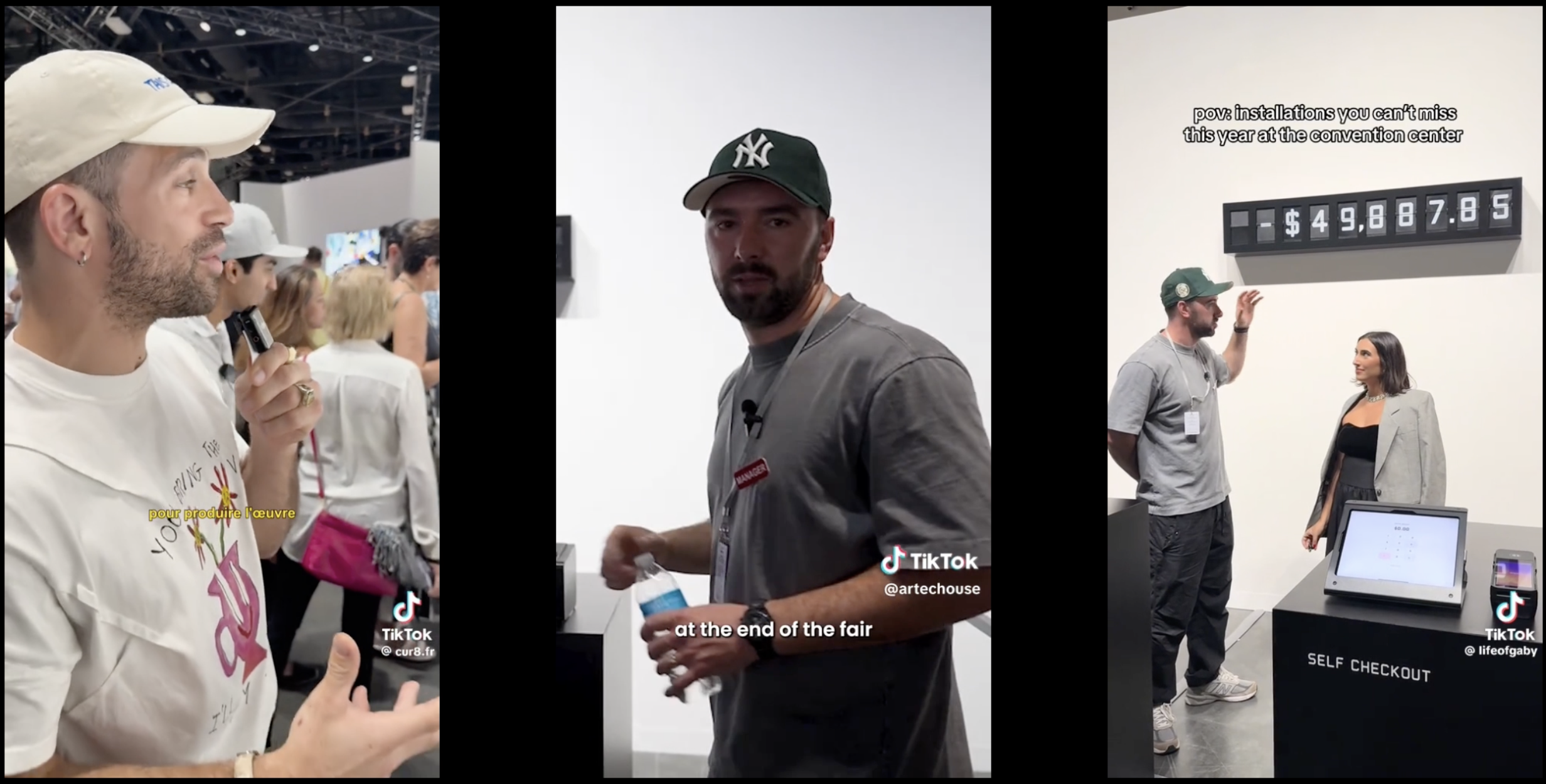
TikTok user-generated content from Self Checkout TikTok user-generated content from Self Checkout

"A fascinating project that makes very visible the substantial cost involved in bringing work to a fair."

Artnet News

"New tech and old names drive sales at Art Basel Miami Beach."

The Art Newspaper

"Every dealer at a Miami fair has been doing this exact calculus in their head all week. Butcher is just making it visible."

The Gray Market
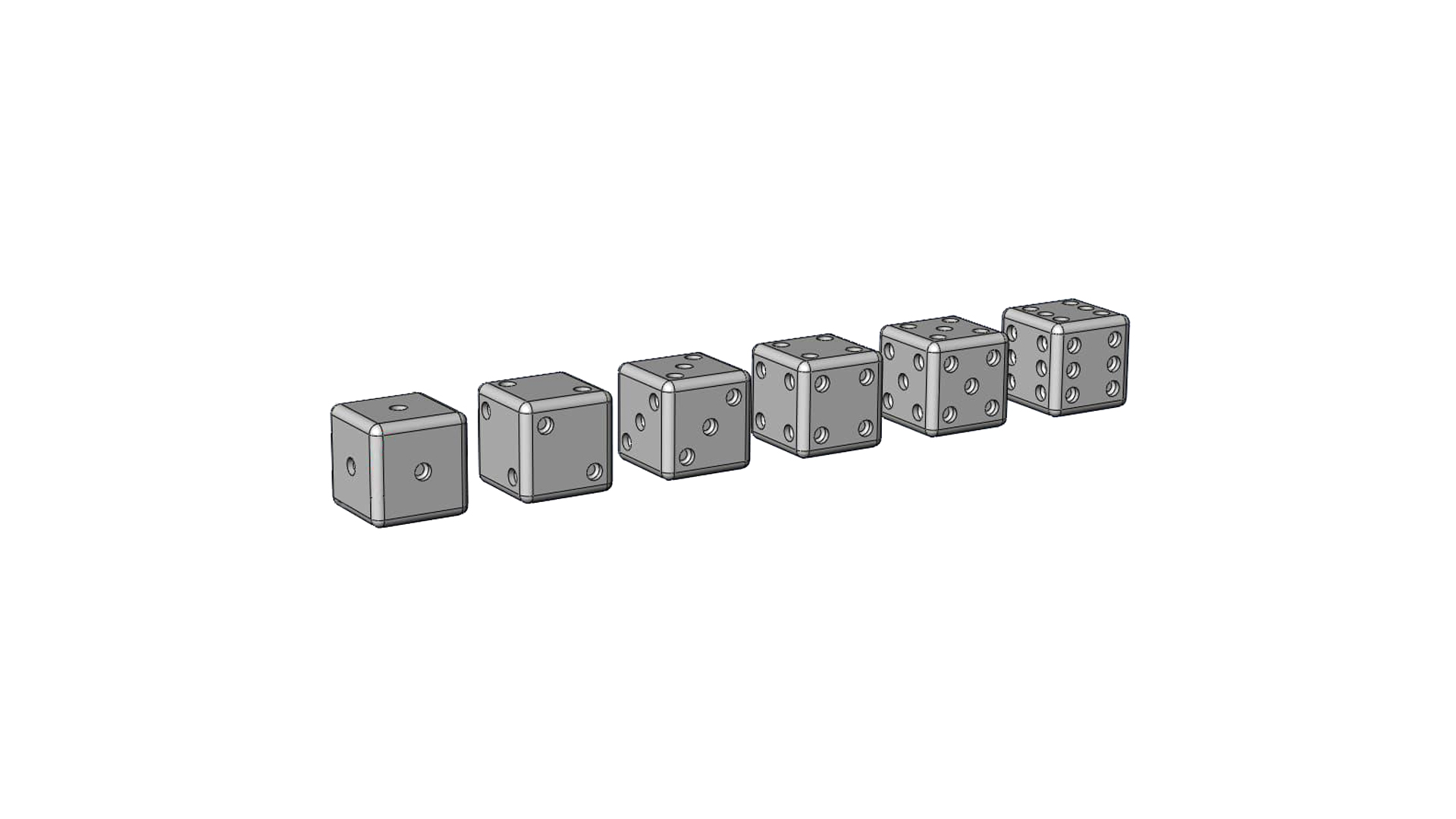
Six sculptural dice, each showing a single number on every face

Dice with chance removed

Work vs Luck sculptural dice installation

Work vs. Luck, Presented at Art Basel Hong Kong

Six dice. Each one shows a single number on every face. The one shows only ones. The two shows only twos. And so on. Tools shaped like uncertainty, rebuilt as certainty. The sculpture asks: what if the outcome was never in question? What if the only variable was who you met along the way?

At the booth, you roll six regular dice. Your result determines which set you take home. Six custom dice pulled to match your exact roll, each locked to its number on every face. Assembled and boxed on the spot. Every set is unique to the moment, but no set is better or worse than another. There is no winning number. Black and white resin. $88.

Above that, 80 editions in pure silver. The perfect 1-2-3-4-5-6. Cast and hallmarked by the UK Assay Office through Asprey Studio. $8,888. Available for direct purchase. One set on permanent display.

The real piece isn't the dice. It's the five conversations it took to collect them.

Starbucks

A coffee and a conversation to play.

Sleeves at the convention center. Stickers or app at city stores. Two formats, one mechanic.

Convention center: Sleeves

Starbucks coffees served at Art Basel carry die-face sleeves. Slide it off, pocket it, trade it. The sleeve is physical, immediate, and visible. The convention center is where the activation is most concentrated, and sleeves keep it tangible.

City stores: Stickers or App

Participating Starbucks locations across Hong Kong distribute die-face stickers with every coffee, or trigger a digital face in the Starbucks app. Stickers are physical and tradeable. The app is frictionless and trackable. Either format counts toward a complete set.

Collect all six faces across any format. Starbucks covers your $88 roll at the SILK Art House booth. Your roll determines your set: six black and white resin VV dice, each showing only the number you rolled. Assembled on the spot and packaged in a custom Starbucks case. The brand stays on the object people take home.

Sleeve
Sticker

Two formats, one mechanic. Sleeves at the convention center, stickers at city stores. Each carries a single die face. Collect all six across either format to earn your roll. Trade with strangers, compare numbers, start conversations. The set is the goal. The people you meet along the way are the point.

01

Receive

Order a coffee. Get a die-face sticker or a digital face in the app. Yours to keep, trade, or show off.

02

Converse

To complete the set you need all six faces. The sticker gives you a reason to look at the person next to you. Five conversations, five strangers, five faces you didn't start with.

03

Roll

Bring six stickers or show a complete set in the app. Starbucks covers your roll. Walk away with a custom set in a Starbucks case.

Starbucks wins at every level

Participating stores

Every participating Starbucks in Hong Kong distributes die-face stickers or triggers a digital face in the app. The city becomes a distribution network for Art Basel.

1 face

A die face on a sticker or in your app. It looks different. People photograph it, share it, ask about it. Every face is branded content moving through the city.

2 faces

You notice the person next to you has a different number. You say something. Starbucks just created a social moment around a coffee.

6 faces

You're walking around the fair, talking to strangers, collecting faces. The story of assembling the set is more shareable than the set itself.

The roll

Anyone can pay $88 to roll. But a complete set of six gets you in free. Starbucks picks up the tab. Every roll produces a unique set. No winning number, no losing number. Just yours.

The case

Starbucks-redeemed rolls come in a custom Starbucks-branded case. The brand isn't on a banner behind the booth. It's on the object people take home, display, and photograph. Permanent, physical, collectible.

50 sets redeemed
6,000 stickers produced
5% redemption rate
300 nodes in the network
250 conversations
$4,400 Starbucks cost

The ask

Starbucks underwrites 1,000 editions at $88 per roll. Total commitment: $88,000. No artist fee. No sponsorship. No production costs. We make and sell the dice. Starbucks just buys rolls for the people who collected all six faces.

Stickers: we provide artwork, Starbucks prints through their existing supplier, or we handle it. Six designs, one per face. App: we provide assets and logic, Starbucks integrates into their existing mobile experience. The entire activation is social, not transactional. Nobody risks anything. Nobody loses. Every participant walks away with either a conversation or a sculpture. Usually both.

What $88k buys

1,000 branded physical objects that leave the fair in people's hands, bags, and luggage. Not impressions. Objects. Each one in a Starbucks case, photographed, unboxed, and shared. Thousands of conversations between strangers, started by a coffee sticker. Earned media from an activation that press and creators cover because it's genuinely novel, not because it's paid. A documented content library: documentary footage, data visualizations, social moments, and user-generated videos, all tied to the brand organically. Real presence at an art fair. Not a logo on a wall. The reason people walked across the building, talked to five strangers, and rolled dice in front of a crowd.

Pay or play. The conversation is the same.

Activation touchpoints

Seven ways this comes to life.

Opening Night

Artist cocktail party

Art Basel opening night. Collectors, press, industry insiders. Starbucks-branded cocktail markers carry a die face alongside a small printed book. The book asks a simple question: is it luck or fate that you're in this room tonight?

Inside: short essays on probability, coincidence, and the people we almost never meet. Why you sat next to that person at dinner. Why you picked up this drink and not the other one. The book reframes randomness as connection. Every page leads back to the same idea: the most valuable things in life aren't the ones you plan.

Nobody collects at the party. The markers and books are a tease. Guests leaf through, absorb the concept, compare die faces with the person next to them, and arrive at the fair the next morning already looking for their first sticker.

The brand doesn't need a banner behind a DJ. It needs to be the reason two collectors introduce themselves.

The Booth

UX of claim

You arrive with six stickers or a complete set in the app. What happens next is a moment, not a transaction. You've already had five conversations with strangers to get here. The roll is a ceremony. Every outcome is equal. SILK team staffs the booth. The brand lives on the journey that got you there and the case you take home.

01
Verify

Present six stickers or show your complete set in the app. Staff verify all faces and log your roll number. The stickers are yours to keep. Marked proof you were there.

02
Roll

Six dice on custom felt. Everyone nearby watches.

03
Receive

Your roll determines your set. Each die shows only the number you rolled, on every face. Starbucks-redeemed sets go in a Starbucks case.

04
Document

Every roll is photographed, logged, and posted to the live feed. Shareable, timestamped, permanent.

The booth isn't a checkout counter. It's a stage. Every roll is a performance with an audience. And every outcome is a one-of-a-kind set. There's nothing to win or lose. Just something to take home and a story about how you got there.

The Roastery

Art Basel food & drink

The Art Basel food and drink area is where the activation first enters circulation. A subtly branded Starbucks presence. Not a pop-up, not a billboard. A data visualization.

A screen displays a live, growing network graph. Each coffee sold adds a node. Each face collected adds a connection. As sets complete across the fair, clusters form and link. You can literally watch strangers becoming connected in real time. The visualization is the branding: clean, minimal, unmistakably Starbucks green on white. Visitors watch the activation spread while drinking the coffee that powers it.

The roastery is where the conversations begin. The booth is where they culminate. The city is everything in between.

Online

Digital experience

The physical activation extends online. Two options depending on scope.

Option A: Live network diagram

A single URL printed on every sticker (or accessible via the app). Visitors see a live, growing network visualization: every roll logged, every completed set mapped as connected nodes. Clean, low-lift. One URL across all participating stores.

Option B: Full digital flow

Each sticker carries a unique QR code. Scan to register your face, track which numbers are scarce across Hong Kong, and roll remotely from anywhere. More production complexity, but turns every coffee into a trackable, scannable, shareable data point. Remote rolls ship dice to your address.

In-Store

Participating outlets across HK

Participating Starbucks locations across Hong Kong distribute die-face stickers or trigger digital faces in the app during Art Basel. One mechanic, city-wide.

In-store signage explains it in a single line: Collect all six. Start five conversations. Roll your set. A QR code links to the live site. Flagship locations near the convention center display the live network visualization: every face collected and every connection made appearing as new nodes in real time.

Every participating store. One mechanic. The city becomes the gallery floor. The coffee becomes a reason to talk.

Pre-Event

Video & promo

The story starts before the fair. Short films seed the concept and prime the audience.

The Dice

30 seconds. Six silver dice on black felt. Slow rotation. Light on engraved pips. Cut to a Starbucks sticker with a die face. Art Basel Hong Kong. March 2026.

The Roll

60 seconds. Unbroken shot: dice on felt in slow motion. Cut to six stickers laid out 1 through 6. Cut to a set being boxed. Collect all six. Roll the dice. Keep what you rolled.

The Trade

90 seconds. Documentary-style. Six strangers, different Starbucks, different die faces. Paths converge at the convention center. They meet. They trade. They roll. The sticker is the only prop.

Three standalone social films. Each ends with Starbucks as the bridge between the art and the audience.

Post-Event

Documentation

The fair is five days. The content it generates lasts months. Starbucks gets a documentary, a data film, and moment-driven social content, all from one activation.

The Numbers

Data-driven recap. Total faces collected. Total sets. Total rolls. The network visualization animated from first node to last. Pure data, made visual.

The Stories

3-5 minute documentary. Follow three groups: how they met, where they traded, what they rolled. Starbucks is always in frame but never the subject.

The Perfect Roll

If someone hits the perfect 1-2-3-4-5-6, that moment gets its own film. The reaction. The crowd. The dice landing in sequence. If nobody hits it, that's a story too. Either outcome is content.

We are also producing a separate, longer-form documentary about the work itself. Sponsorship of that film is open to Starbucks as an additional opportunity.

The artwork is called "Work vs. Luck." The activation is not about gambling. Here's why.

There is no winning or losing. Every roll produces a unique set of six dice. A roll of 3-3-1-4-6-2 is not better or worse than 5-1-2-6-4-3. Every outcome has equal value ($88). Every participant takes home the same product. The roll determines which set is yours, not whether you get one.

No money is wagered. Participants either pay a flat $88, or collect six stickers through Starbucks and roll for free. There is no stake, no risk, and no scenario where someone walks away empty-handed. The Starbucks activation specifically removes the financial element entirely: a complete set of stickers earns a complimentary roll.

The mechanic is social, not transactional. Collecting six die faces requires meeting five strangers. The activation is structurally closer to a scavenger hunt or a trading-card mechanic than any form of gambling. The value is in the conversations, not the outcome.

The sculpture itself eliminates chance. Each custom die shows only one number on every face. A "three" die shows threes on all six sides. The artwork literally removes uncertainty from the object. The title "Work vs. Luck" is a philosophical question about effort and attribution, not a reference to wagering.

Precedent. Sticker-collection mechanics (collect all six, trade with friends) are widely used by major brands including McDonald's (Monopoly), Coca-Cola, and supermarket chains globally, without requiring gambling licenses. This activation follows the same structure: collect, trade, redeem.

The word "luck" in the title asks a question about life, not about odds. The activation answers it: the most valuable thing isn't what you rolled. It's who you talked to.

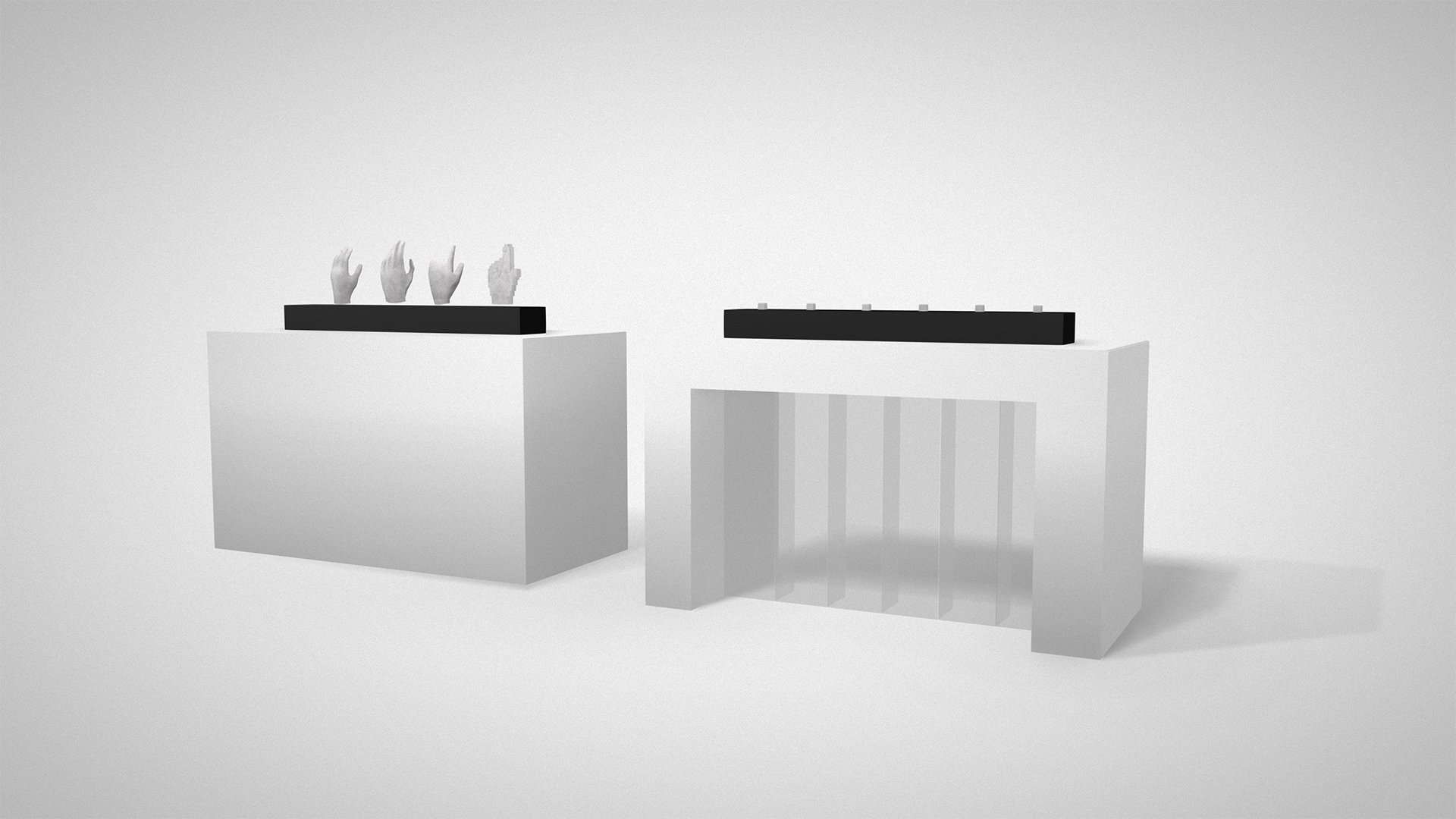
Four hands in solid silver. From anatomical detail to pixelated cursor. A progression tracing the migration of labour from physical effort to interface-driven action.

Cast in pure silver and hallmarked by the UK Assay Office, Work reintroduces weight, materiality, and institutional verification into a conversation dominated by speed and networks. The first hand bears newly registered marks connected to the artist, embedding a centuries-old tradition of trust directly into the object itself.

The result is a collision of timelines: slow institutional proof alongside fast digital verification. A sculpture that stages the question of what counts as evidence when value increasingly moves faster than material trace.

What happens when labour becomes invisible, abstract, and how is belief in effort maintained when proof disappears?

Asprey Studio

The contemporary design arm of Asprey London, est. 1781. Over two centuries of heritage in silversmithing and fine craftsmanship. Bespoke objects using traditional techniques and contemporary design.

SILK Art House

An art house uniting gallery representation with a creative and tech studio, built to expand artists' potential rather than limit it.

EX-R International

Experiential marketing studio specializing in culturally embedded brand activations, turning concepts into physical moments that move through audiences, not past them.